

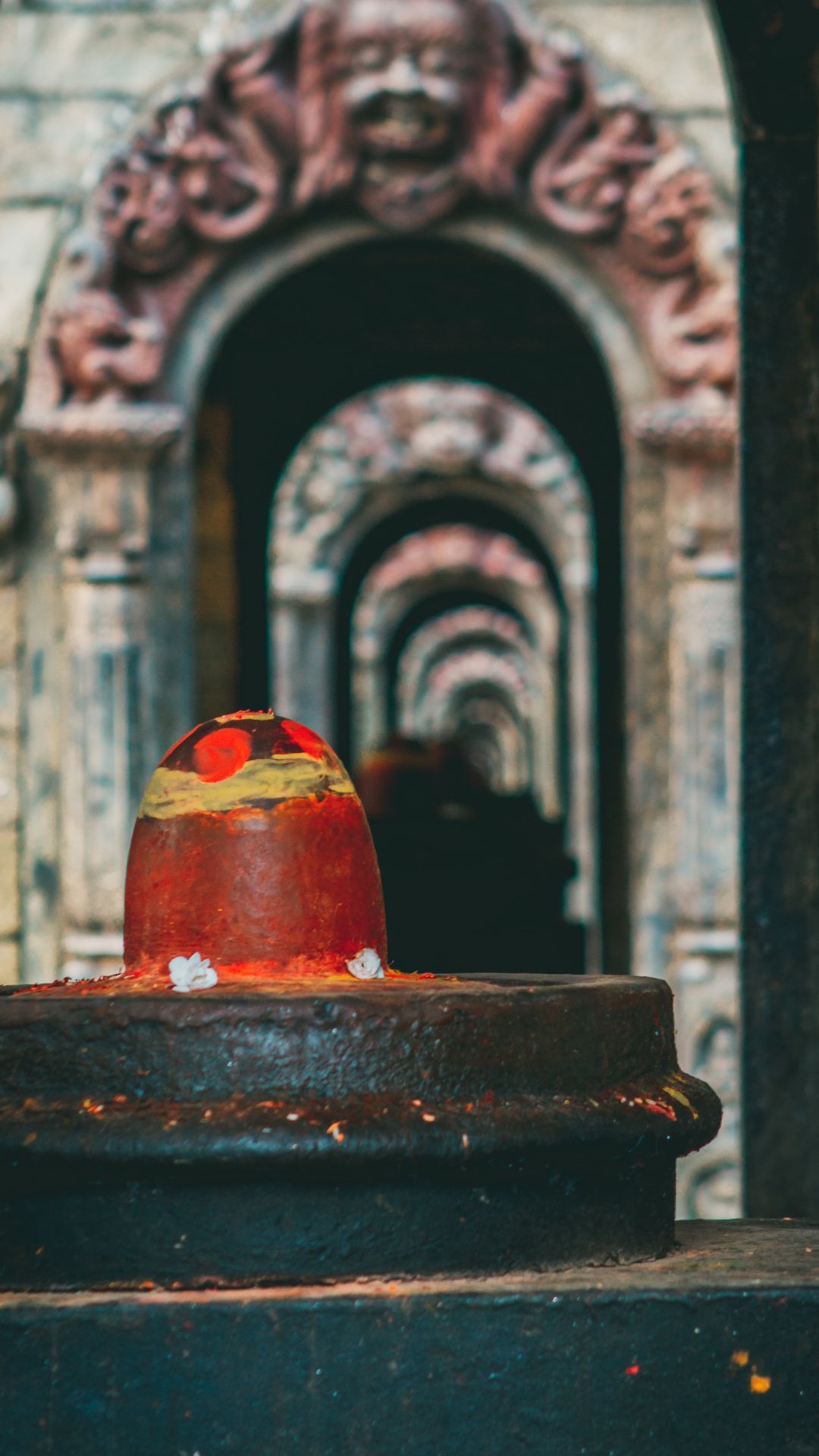
Altar in Life
In Hindu tradition, it is customary to honor Life through deities. We reserve a place in our home for an altar where we place the deities we revere, as well as accessories to support more formal rituals such as bells, camphor, kunkum (red powder), sandalwood paste, oil lamps, among others.
We begin early in the morning, before eating and after bathing, in front of the altar, with more or less elaborate rituals and/or meditation. Prayers and a mantra or mantras that have been given to us and that we repeat a number of times may be included.
And although I was not born into the Hindu culture, I spontaneously identified with this daily ritual of offering to the deities, whether in the form of sound, food, clothing, water, incense, or light.
And that made me think about what the altar truly is, regardless of whether or not we establish any relationship with any culture, tradition, or religion.
The word “altar” comes from the Latin ‘altare’ and “altus,” which mean “high place” or “high.”
It can also be:
“A table or elevated structure used for religious celebrations, offerings, or sacrifices.
In religious architecture, the central area of a church where the main rites are performed.
In geology, an elevated, flat rock formation, similar to a table.
Figuratively, a place of devotion or dedication to a cause or ideal.”
Standing before an altar leads us to a natural attitude of humility, of gratitude for the day and for life and for everything that has been offered to us so far. It can also be a moment when we honor our ancestors, who sacrificed so much for this life to exist, and the Universe in whatever form or forms we identify with.
But how do we bring this outside the altar—how do we continue with this perception throughout our lives amid hustle and bustle, challenges, conflicts, among other things? How do we transpose this act of gratitude when we witness something unfair, something that goes beyond superficial acceptance?
What helps me in this process is witnessing all these objects, sensations, sounds, and people as the continuation of that tiny altar with which we begin and/or end the day.
Observing that we ourselves are within this infinite cosmic entity that presents countless forms before us and, as is often alluded to in the Vedic tradition, being aware that everything is clay and the forms are the pot, and that if we remove the pot, we are left with the clay, alluding to the Consciousness that permeates everything.
In this way, I no longer see myself as something separate from this Universe, I no longer see myself as something unworthy of reverence, of an altar, and I begin to contemplate this body, these thoughts, this energy, and this observation of all of this as being equally clay.
This is reflected in each person as well, even if it is challenging. The person is also this essence, whether they know it or not, acting, in our view, in the wrong way or not.
And although intellectually all this makes sense, cultivating this vision continuously requires constant attention until it becomes, let’s say, a habit.
In this bridge between the altar of the house and the altar in which we are continuously inserted, there may be a moment when this altar with which we began this journey ceases to have the same importance as before, for it is both an altar and everything else.
Another point of view would be to look at this altar as that same Whole and move on to the altar of the kitchen, the office, the living room, the backyard, the street, the neighbors, the rivers, the family, the planets, all this stellar infinity.
And, as such, there is also a restfulness in this. A restfulness in that, regardless of whether one reveres a physical altar or not, the altar is always present.


Leave a Reply